
Christina Janiga Psychotherapy - Blog
This blog is not a substitute for therapy, but provides evidence-based education for the purposes of self-help and information
When the Body Leads: Deep Brain Healing at the Level of the Brainstem
By Christina Janiga, RP, EMDR Therapist & DBR Therapist · March 2026 · 11 min read
I recently returned from something I can only describe as a recalibration — five days immersed in an intensive training with Martin Warner, co-pioneer of DBR-AT: the Somatic Interweave of Deep Brain Reorienting and Alexander Technique. As a registered psychotherapist who has spent years working at the level of trauma and the nervous system, I walked away changed. Not just in what I know, but in what I carry — in my body, in my posture, in the way I inhabit a room.
Martin is an Alexander Teacher with over 40 years of experience working with people in an educational and therapeutic capacity. Over the past 11 years he has collaborated directly with Dr. Frank Corrigan — the originator of DBR — to design a somatic interweave component that brings the precision of Alexander Technique into the heart of deep brain trauma processing. Working with him for five days was, in a word, phenomenal.
This post is my attempt to bring you inside that experience — and more importantly, to explain the neuroscience behind why this kind of intensive work can produce changes that years of traditional therapy sometimes cannot.
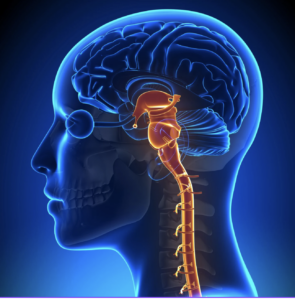
"Trauma isn't stored in your memories. It's stored in the body's most primitive survival architecture — and that's exactly where DBR works."
First: What Is Deep Brain Reorienting (DBR)?
Developed by Scottish psychiatrist Dr. Frank Corrigan, Deep Brain Reorienting is a body-based, trauma-processing psychotherapy that works at the level of the brainstem — the oldest, most evolutionarily ancient part of the human brain. To understand why this matters, it helps to think about how trauma actually gets stuck in the nervous system.
When something overwhelming happens — whether it’s a single traumatic event or years of chronic stress and relational wounding — your brain doesn’t neatly file it away. Instead, the experience gets encoded at multiple levels of the nervous system simultaneously. The brainstem registers the raw, pre-verbal shock of the moment: the sudden orienting response, the freezing, the bracing. This happens in milliseconds, long before your cortex (thinking brain) has any idea what’s going on.
🧠 THE NEUROSCIENCE
The Brainstem's Role in Trauma
The superior colliculus and periaqueductal grey (PAG) — structures deep in the brainstem — are among the first neural areas to register threat. They initiate the orienting response: a reflexive shift of attention before conscious thought is possible. DBR works by gently tracking the residue of this pre-cognitive activation, allowing the nervous system to complete responses that were interrupted at the moment of overwhelm.
Research by Dr. Ruth Lanius, Dr. Frank Corrigan, and colleagues (Kearney, et al., 2023, randomized controlled trial) demonstrated statistically significant reductions in PTSD symptoms after just 8 DBR sessions — with gains maintained at 3-month follow-up. Read the trial →
So Where Does Alexander Technique Come In?
The Alexander Technique, developed by F.M. Alexander in the late 19th century, is a practice of somatic re-education — learning to release habitual tension patterns in the body and restore what Alexander called the “primary control”: the dynamic, coordinated relationship between the head, neck, and spine. Martin was trained in this tradition by Don Weed, in the lineage of master teacher Marjorie Barstow, who trained directly with F.M. Alexander himself.
At first glance, this might seem like it belongs in a movement studio rather than a trauma therapy room. But what the intensive made unmistakably clear is this: the tensions we hold in the neck and head are not merely muscular — they are neurological.
The base of the skull — the suboccipital region — sits directly adjacent to the brainstem. The muscles here are among the most neurologically rich in the body, densely packed with proprioceptive receptors. When we are chronically braced — holding our heads forward, collapsing the chest, tightening the throat — we are not just holding postural tension. We are sustaining a low-grade activation of the very neural circuits involved in threat detection and survival response.
🩺 CLINICAL EXAMPLE
What Alignment Can Unlock
When Martin first aligned my head, neck, and shoulders on the first day of the 5 day intensive, it was the first time in a long time I had been able to sit comfortably without pain or fidgeting. Not managed pain. Not reduced pain. Absent pain and peace within my body — and it remained for the entire five days.
This is not simply a postural adjustment. Neurologically, what Martin was facilitating was a release of chronic suboccipital tension that had been maintaining a background state of low-level threat activation in the brainstem. When that holding releases, the nervous system registers something profoundly different: safety. This is the kind of shift that is difficult to achieve through insight alone — it has to be felt in the body, at the level of the body, to be truly integrated.
When the head-body relationship aligns, something downstream in the nervous system often follows. For me, it was a kind of exhale I didn't know I had been holding for years.
Assessing Current Conditions: A Way of Being, Not a Checklist
One of the most quietly profound things Martin transmitted over the five days was something that is difficult to put into words precisely because it is not a technique — it is a way of being as a practitioner. He described it simply: before you do anything, you “assess the conditions present”. Think of it like entering a room you need to sweep. Which hand goes on top? Where do you begin? Do you start in the corner, or work from the centre outward? The answer is never fixed — it depends entirely on what is present in the room right now and how you are in your body. The conditions themselves tell you what is needed.
In practice, this means the practitioner arrives with an open, attuned awareness — not a protocol, not a predetermined plan — and reads what the nervous system in front of them is communicating in this moment. What is the quality of the person’s bearing? Where is tension held? Are they turning away or turning towards something? Is there a readiness to engage, or does the system need more settling first? These questions are not asked once at the start of a session. They are asked continuously, because the conditions are always evolving.
And once an interweave — the integration of Alexander Technique’s somatic awareness into the DBR process — is present and underway, the practitioner’s attention doesn’t relax. If anything, it deepens. The conditions may shift: a new layer of tension may emerge, an emotion may surface earlier than expected, the head and body relationship may shift and change. The practitioner is constantly assessing the conditions present, constantly responsive — not managing the process from a distance but moving within it, moment by moment, alongside the client.
This is what separates a skilled DBR-AT practitioner from someone following a script. It is an embodied intelligence — developed through practice, refined through immersion, and guided always by what is actually present rather than what was planned.
📖 RESEARCH CONTEXT
Bottom-Up Healing: What the Research Tells Us
Contemporary trauma neuroscience — from the work of Bessel van der Kolk and Peter Levine’s Somatic Experiencing — consistently points to the same conclusion: lasting trauma recovery requires working with the body and the subcortical brain, not just cognitive reprocessing.
DBR’s randomized controlled trial data (Kearney et al., 2023) places it firmly in the emerging category of evidence-supported, bottom-up therapies. The integration of Alexander Technique adds a layer of embodied precision to that foundational approach.
What Happens When Defences Begin to Dissolve
One of the most profound things I witnessed over the five days was not a single dramatic moment — it was something far subtler and more moving. Across the group, I watched people’s defences quietly deconstruct. The holding, the guardedness, the carefully maintained presentation that we all carry — it began, gradually, to soften.
This is exactly what the neuroscience would predict. When the brainstem’s background state of threat activation begins to ease, the defensive structures built around it — the social masking, the muscular armour, the emotional distance — no longer have the same function. They were always protective adaptations, not character. And when safety is genuinely registered at the neural level, they can begin to release.
What was left, in each person, was something quieter and more real. By the end of the five days, the sense of authentic connection in the room was unlike anything I have experienced in a professional training context. We got to know each other not through conversation or disclosure, but through the shared experience of having our layers of defence gently dissolved. The person I met once that softening had happened felt like the actual person — present, warm, unguarded.
What was left, once the defences dissolved, was not vulnerability — it was authenticity. There is a profound difference between the two.
Why Intensive, Immersive Work Produces Lasting Change
The word ‘transformational’ gets overused in wellness spaces. I want to be precise about what it means here — because what I observed and experienced over those five days has a neurobiological explanation.
Trauma, particularly early or developmental trauma, is associated with what researchers call maladaptive memory reconsolidation. The nervous system has learned — through repeated experience — that certain body states, sensations, or relationship cues predict danger. These learned associations are encoded subcortically, below the level of conscious awareness. They drive the reactivity, the hypervigilance, the shutdown, the relationship difficulties that so many people struggle with — often without understanding why.
What intensive, immersive work does — whether it is a 5-day training, a therapeutic intensive, or a sustained course of DBR therapy — is create the conditions for memory reconsolidation: the neurobiological process by which existing emotional memories can be updated and rewritten, rather than simply suppressed or managed.
Memory reconsolidation requires a very specific set of conditions: the original learning must be activated (the neural pattern must be ‘online’), and then something mismatching — something that contradicts the old prediction — must be introduced in a state of relative safety and regulated arousal. This is not insight. This is not coping. This is the nervous system genuinely updating its model of the world.
Over five days of intensive immersion — returning to the same material repeatedly, in the presence of expert guidance, with the body engaged as a primary instrument of learning — those conditions were met, again and again.
What This Means for You as a Client
You don’t need to attend a 5-day intensive to benefit from this work. What the intensive deepened in me, as your therapist, is the precision and embodied attunement I bring into the room with you.
In a DBR session, we work slowly and gently. We don’t require you to tell the story of your trauma in detail. We don’t flood your system with overwhelming emotion. Instead, we track the subtle signals of shock — the slight tension behind the eyes, shudders, tingles, electric currents, the hollowing that feels like held breath, and the bracing within the shoulders — that indicate your brainstem is beginning to engage with a memory or a pattern. And then we work with those signals, rather than around them.
The result, over time, is not just reduced symptoms. It is a different relationship with your own nervous system. A quietness that doesn’t feel like numbness. A capacity to be present in your bodies without bracing for what comes next.
That is what deep brain healing looks like. And that is what this intensive reminded me is possible — for all of us.
✦ FROM THE THERAPIST
My Personal Reflections from the Intensive
Five days with Martin Warner left me changed in ways I am still integrating. These are my own words — what I noticed in my body, and what I am carrying forward.
My body feels still. It feels peaceful and calm in a way that is new — not forced, not managed, just quiet.
Now, when pain comes in, I find myself curious rather than reactive. I ask: how can I adjust my head and body relationship to see if that changes anything? I am always assessing my own current condition. And what I notice is that I feel more present than I ever have.
There is also something I did not expect — space. Space between when something happens and when I respond. Room to explore choice in the current moment. Room to ask myself: how do I want to respond to this? That pause, which used to feel impossible, now feels natural.
And what I am learning — perhaps the most surprising thing of all — is that I don’t have to do very much. All I have to do is soften my posture, and I observe shifts happen – in myself and others. Simply through being rather than doing. I feel more open. And from that openness, everything else follows.
Related Reading
Ready to Experience Deep Brain Healing?
If you’re curious about whether DBR or the Alexander Technique Interweave is right for you, Christina offers a free 15-minute consultation. No pressure — just a conversation about where you are and whether this approach is a good fit.
References
Kearney, B.E., et al. (2023). A randomized controlled trial of Deep Brain Reorienting. Psychological Medicine.
Corrigan, F.M. (various). Publications available at deepbrainreorienting.com
Lanius, R.A. Publications via lhscri.ca

About The Author
Christina Janiga, BSc, MACP, RP is a Registered Psychotherapist, Certified EMDR Therapist & Consultant, and DBR Therapist (Levels 1, 2 & 3) based in Burlington, Ontario. She provides in-person and virtual psychotherapy across Ontario.